Rainbow Slides: Installation Suitability for Different Terrains
Rainbow slides are highly adaptable and can be installed on flat ground, natural slopes and mountain terrains. However, construction methods, costs and user experiences vary greatly, so reasonable planning based on site conditions is essential.
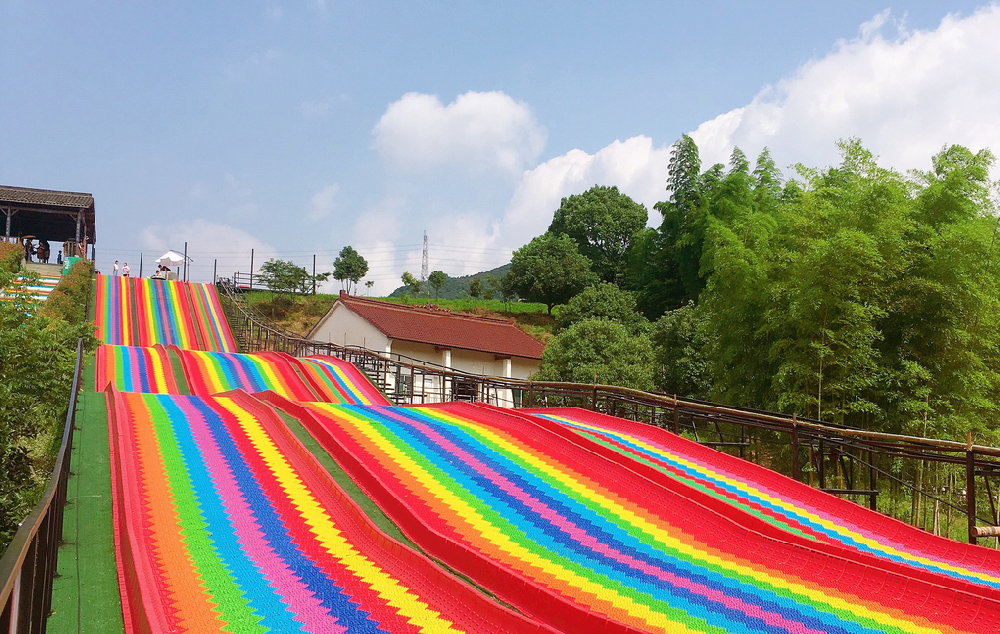
Natural slopes are the most popular and ideal choice. They feature natural elevation differences, requiring minimal earthwork. This ensures fast construction and cost efficiency. As long as the slope surface is even with no protrusions, proper drainage and reinforcement are completed, and the gradient is kept between 13° and 25°, you can deliver a safe and pleasant sliding experience.
For mountain sites, rainbow slides work perfectly for long-distance scenic attractions. Boasting large vertical drops, such slides offer outstanding visual effects and great fun. Given the complex rocky terrain, you need to level the ground and lay base cushions first. Extra measures including slope reinforcement, heightened guardrails, segmented speed reduction zones and buffer areas are required. Complete drainage and lightning protection systems also need to be installed, with the gradient strictly regulated for safety.
Flat land has no natural height difference, so artificial grading is necessary. You may choose earth embankment for spacious sites, or steel frame structures which save space and allow flexible designs for parks and small amusement venues. Flat-ground projects involve larger workloads and higher costs, and the slide length should be limited. Generally speaking, the overall gradient of rainbow slides must be controlled within 13° to 30° to guarantee safe operation.