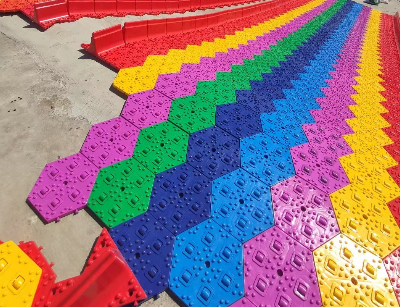
Rainbow Slide: Pre-Construction Preparation Guide
To build a successful dry land rainbow slide, the focus must be on standardized construction, superior user experience, and refined service. A solid foundation in the early stages ensures safety, longevity, and customer satisfaction.
1. Site Selection & Infrastructure
The first step is strict compliance with approval processes and thorough site surveying.
Terrain: Select a location with a stable foundation and a scientific slope to ensure structural integrity.
Utilities: High-standard infrastructure is non-negotiable. Ensure robust water, electricity, and drainage systems are in place, along with convenient access routes to lay a solid hardware foundation.
2. Material Selection & Climate Adaptation
Equipment choices must be tailored to local climate characteristics to guarantee performance.
Durability: Use high-quality slide materials and protective facilities with strong weather resistance.
Performance: Prioritize materials with high smoothness to fundamentally eliminate issues like jamming or excessive heat. This ensures a滑行 experience that is both safe and fluid.
3. Layout & User Experience
The design should focus on differentiated and immersive experiences through scientific planning.
Track Design: Optimize the length, slope, and number of lanes to balance the needs of parent-child leisure and youth racing.
Flow Management: Rationally divide functional zones—waiting, buffering, and resting—to optimize passenger flow. This effectively reduces queuing congestion, creating a safe, comfortable, and unforgettable experience for every visitor.