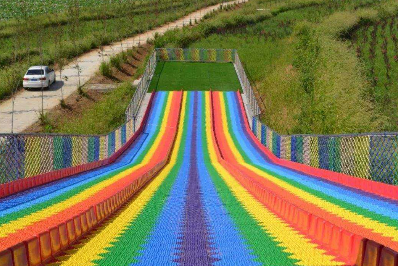
Fortifying Safety: Full Lifecycle Inspection System for Rainbow Slides
Rainbow slides, as large-scale amusement rides, rely on a rigorous, meticulous, and full-lifecycle inspection and maintenance system to ensure safe operation. This system goes beyond routine equipment upkeep; it is a solemn commitment to the safety of every guest.
The top priority in inspections is the thorough check conducted before and after daily operations. Before opening to the public, staff must perform a comprehensive sweep of the slide surface to ensure there are no stones, branches, or any other debris that could compromise the sliding experience or damage the tubes. Inflatable sliding tubes are a critical focus and must be checked to confirm they are fully inflated, leak-free, and show no signs of excessive wear. Additionally, the smoothness of slide joints, the tightness of bolts on guardrails and platforms, and the functionality of emergency braking systems are non-negotiable safety benchmarks. After closing each day, another patrol is required to promptly identify and record any new issues that may have arisen during operation.
The inspection framework must extend in depth, forming a long-term mechanism that spans weekly, monthly, and quarterly intervals. Weekly checks should focus on the supporting structures beneath the slide to ensure they remain stable and have not shifted. Monthly routines require deep cleaning and professional maintenance to remove accumulated oil and grime from the slide surface, as well as verifying that all safety warning signs remain clear and highly visible. Quarterly inspections shift focus to core safety parameters and material aging. Professionals must verify that the slide's gradient data still meets design specifications and conduct a comprehensive assessment of the fiberglass material for potential structural risks such as cracking or deformation.
Furthermore, the inspection plan must be adaptable to local conditions and seasonal changes. Following extreme weather, such as intense heat or severe cold, special attention must be paid to gap variations at slide joints caused by thermal expansion and contraction. During peak traffic periods like holidays, inspection frequencies should be dynamically increased, with a particular focus on high-wear components like frequently used sliding tubes.
In short, inspecting a rainbow slide is never a mere formality; it is a systematic project that demands persistence and continuous refinement. Only by integrating standardized inspections into every facet of daily operations can we truly build a solid "rainbow" safety defense line.