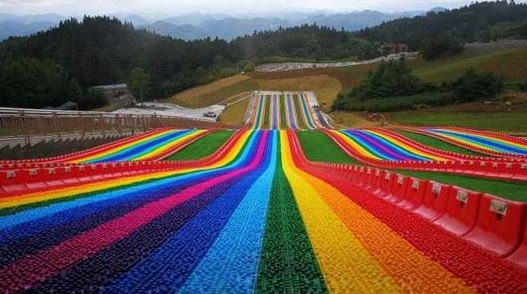
Purchasing Guide for HDPE Rainbow Slide Materials
When building and operating rainbow slides, the choice of material directly dictates the safety and lifespan of the project. While High-Density Polyethylene (HDPE) is the industry standard, there is a massive performance gap between virgin HDPE and recycled materials.
Slides made from virgin HDPE feature a smooth, dense surface with vibrant, uniform colors. They offer excellent impact resistance and flexibility, remaining free from stress whitening or brittleness even in freezing temperatures. Furthermore, the inclusion of UV and oxidation stabilizers ensures they won't fade or degrade under prolonged outdoor exposure. In contrast, recycled materials suffer from compromised molecular chains due to repeated processing. They often have a rough surface with visible impurities, air bubbles, and dull colors. Their tensile strength and flexibility are significantly reduced; even slight bending can cause stress whitening or cracking. Over time, exposure to sun and rain leads to severe embrittlement and deformation, posing serious safety hazards.
During procurement and inspection, you can quickly verify material quality using a three-step method: "Look, Test, and Bend." First, look at the surface: virgin HDPE is smooth and bubble-free, while recycled material is rough and flawed. Second, test the wear resistance: qualified virgin HDPE has a density of 0.941–0.960 g/cm³ and resists scratches from sandpaper. Finally, bend the material: virgin HDPE bends smoothly without whitening, whereas recycled material will easily show stress marks or snap.
To ensure visitor safety and project longevity, buyers must explicitly require "100% virgin HDPE" in their contracts and request third-party material test reports. Always conduct random sampling inspections upon delivery using the methods above to eliminate the risks associated with substandard recycled materials at the source.