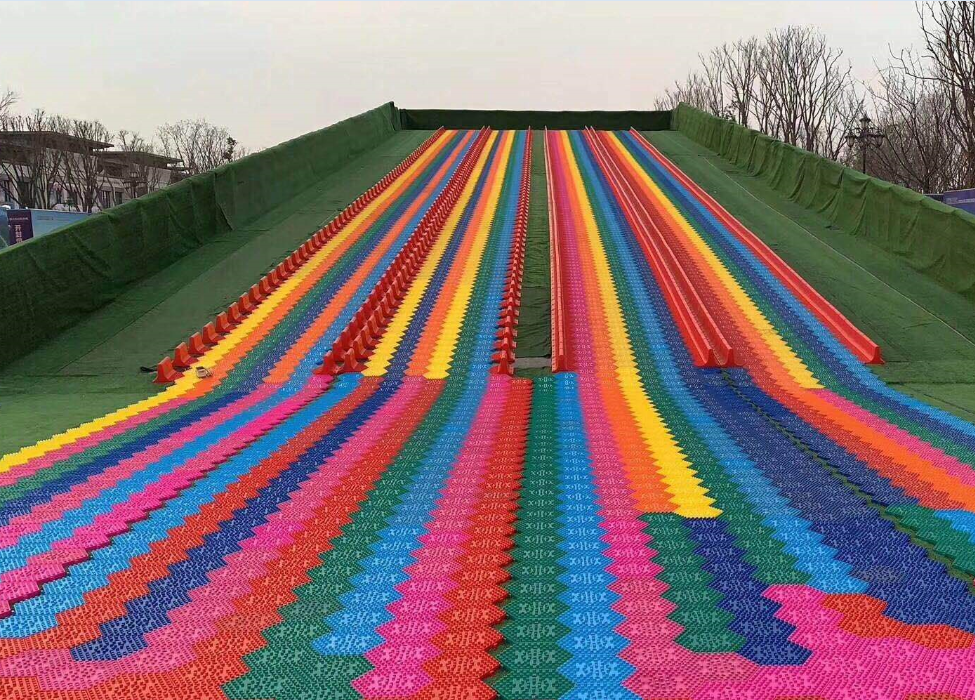
Anti-Slip Safety Measures for Rainbow Slides During Rainy and Snowy Weather
To prevent accidents such as sliding out of control, falls and equipment skidding caused by slippery slide surfaces and reduced friction on rainbow slides in rainy or snowy weather, full-range anti-slip safety protocols must be implemented. Before rain or snow arrives, staff shall thoroughly inspect the slide surface, launch platform, end buffer zone and side walkways to clear accumulated rainwater, snow and ice. Anti-slip mats and anti-slip gravel will be laid at the starting area, passenger waiting zone and stopping area, with warning signs for slippery conditions and speed limit notices for wet weather posted prominently.
Operation control will be enforced based on weather severity during precipitation. For light rain or snow, crews will continuously drain water and sweep snow off the slide surface, with dedicated attendants maintaining safe sliding intervals and banning standing, rolling over or exiting sleds mid-slide. Operations will be fully suspended with all entrances sealed under heavy snow, icy surfaces or heavy downpours.
All sledding equipment undergoes strict checks; only standard thickened wear-resistant sleds with intact anti-slip bottom layers are allowed for use, while damaged slippery sleds are taken out of service. On-site safety officers patrol at frequent intervals to drain pooled water, remove loose snow and manage passenger flow. Anti-slip first-aid supplies and de-icing tools are kept on hand for rapid response to slip-and-fall or rear-end sliding incidents. After daily operation, crews inspect slide structural fixtures and repair worn anti-slip coating on surfaces, establishing a comprehensive anti-slip safety system covering equipment, site management and personnel.