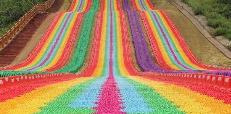
Rainbow Slide Construction Guide: Foundation-Free vs. Steel Frame
The construction methods for rainbow slides are mainly divided into two categories based on site conditions: "foundation-free natural slope construction" and "steel frame structure construction," each with its own distinct features.
Foundation-free construction requires no additional steel supports. The slide is laid directly on natural slopes or simply leveled land. Its main advantages are relatively low investment costs, shorter construction periods, and minimal environmental impact. This method preserves the original landscape well, allowing the slide to blend seamlessly with natural settings like forests or farms. It is highly suitable for scenic areas with natural slopes that aim for a faster return on investment and value ecological protection.
On the other hand, steel frame structure construction involves erecting steel frameworks on flat or uneven terrains to create the desired slopes and heights. Its key advantage is that it has fewer site restrictions, offers high design flexibility, and provides strong structural stability and load-bearing capacity. This method is ideal for flat playgrounds, city parks, or abandoned mines where there is no natural drop, helping to create visually appealing shapes. Although the initial investment is relatively higher, it delivers a more thrilling riding experience and helps attract visitors.
In summary, foundation-free construction focuses on being "natural, cost-effective, and quick," while steel frame construction emphasizes "flexibility, excitement, and versatile designs." Investors should comprehensively evaluate site conditions, budget, and expected outcomes to choose the most suitable construction method based on local conditions.